GSDGold State Dumpster Rental

Construction and demolition

Construction Dumpster Rental Planned Around CALGreen

For contractors and owner-builders across California. Call (916) 584-9619 with the project scope and phase, and we will line up a local provider that can document diversion for your permit.

Call (916) 584-9619
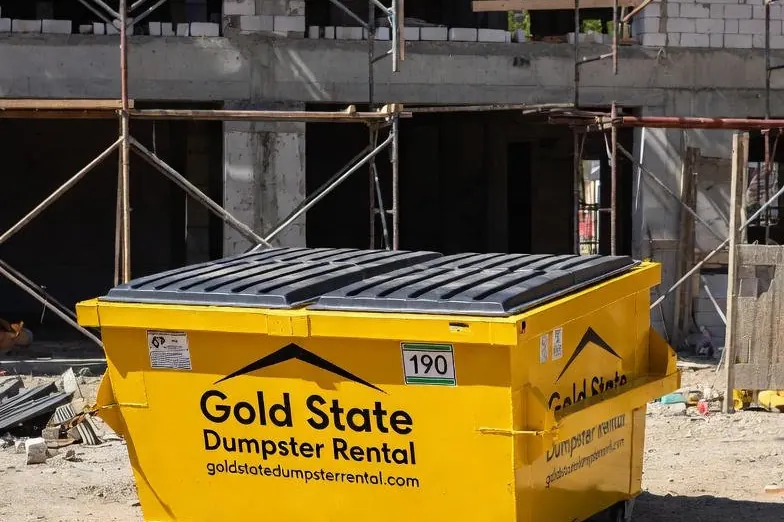
A yellow Gold State dumpster with a black lid on a building site with concrete block walls and scaffolding
Job-site bins work best when the recycling plan is settled before the first load.

Construction debris: in and out

Usually accepted

  • Framing lumber, sheathing and offcuts
  • Drywall, insulation (non-asbestos) and ceiling tile
  • Concrete, block and brick, in their own bin where possible
  • Metal studs, rebar, ductwork and wire
  • Packaging, pallets and cardboard

Keep out of this load

  • Asbestos-containing materials and anything untested from older buildings
  • Lead-painted debris that has not been handled under the right rules
  • Paint, adhesives, sealants and solvents in liquid form
  • Treated wood, where the facility does not accept it
  • Contaminated soil

Construction dumpster rental on California job sites

A construction dumpster rental is different from a cleanout bin because the job usually has a building permit, and the permit brings recycling rules with it. California's Green Building Standards Code, known as CALGreen, requires covered projects to recycle or salvage at least 65% of their nonhazardous construction and demolition debris. Many cities set additional rules, ask for a waste management plan, or want weight tickets before the final inspection.

That changes how you plan bins. The goal is not just to get debris off the site. It is to get it off in a way you can document. Gold State lines up an independent provider that can work in your city and take the load to a facility that sorts and recycles it, or to separate facilities for clean materials.

Planning bins by phase

Demolition. Heavy and mixed. Concrete, plaster, tile and masonry belong in a 10-yard bin, swapped as often as needed. Wood, drywall and fixtures go in a larger bin.

Framing. Light and bulky. Offcuts, sheathing scraps, packaging and pallets fill a 30 or 40-yard bin without approaching its weight allowance. Clean wood is easy to recycle when it is not mixed with trash.

Finish work. Drywall offcuts, cardboard, cabinet packaging and flooring scraps. A 20-yard bin usually covers it.

On a tight urban lot, one bin at a time is often all that fits. In that case, sequence the phases and schedule swaps between them.

Older buildings

Buildings constructed before 1978 may contain lead paint, and older materials may contain asbestos. In California, asbestos must be identified and handled by qualified people before demolition, and it never goes into an ordinary roll-off. Lead-paint debris from renovation work falls under federal EPA and state rules. Get testing done first, and tell the provider exactly what is in the load.

See the California construction recycling and permit guide for a fuller explanation of the rules.

Sizes at a glance

  1. 10yard
    Small and heavyA bathroom gut, a garage clear-out, or broken concrete and dirt. Roughly three to four pickup loads.
  2. 20yard
    The remodel binA kitchen remodel, flooring for a whole house, or a mid-size shingle tear-off. Roughly six to eight pickup loads.
  3. 30yard
    Whole-house jobsAn addition, a full move-out or estate cleanout, or interior demolition. Roughly nine to twelve pickup loads.
  4. 40yard
    Bulky and lightCommercial build-outs and big, light debris such as framing scrap and cardboard. Roughly twelve to sixteen pickup loads.
Help

Questions Californians ask before they book a bin

Does my construction project have to recycle its debris?

If it is permitted new construction, or an addition or alteration covered by CALGreen, generally yes: at least 65% of nonhazardous construction and demolition debris has to be recycled or salvaged. Your city or county may set stricter rules. Check the conditions on your building permit.

Should I use one bin or several on a construction job?

Several, if you have the space. A separate bin for concrete and masonry, and another for mixed debris, makes recycling easier and keeps the heavy bin within its weight limit.

What paperwork do I need from the hauler?

Usually weight tickets or a diversion report showing where the debris went and how much was recycled. Many building departments want these before final inspection. Ask the provider about them up front.

Can any hauler collect my construction debris?

Not in every city. Los Angeles, San Francisco and Oakland are among the California cities that control who may haul construction debris. Confirm the provider is authorized before the first bin arrives.

Free quotes by phone

Call with your address, project and dates

Describe the job and where it is. You will get a straight price, not a sales pitch.

Call now (916) 584-9619
Gold State Call now (916) 584-9619 Call for pricing
Call now (916) 584-9619 Quick quote