How a roll-off rental works
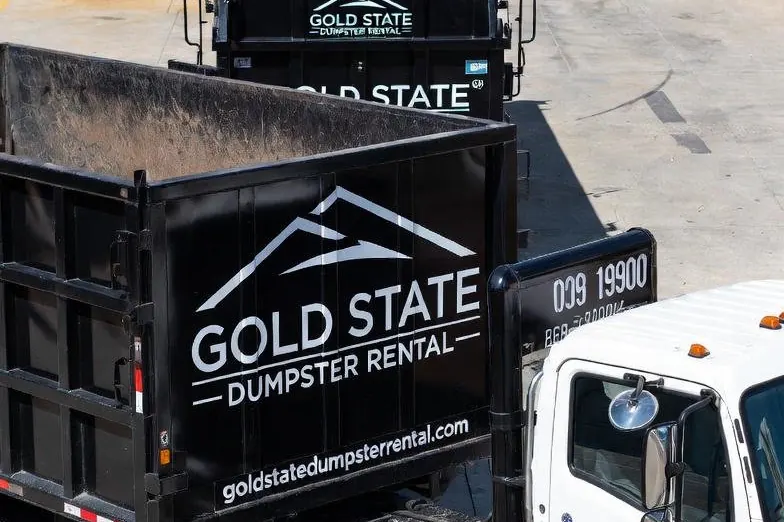
A roll-off dumpster is a steel container with an open top and a swinging door at one end. A specialized truck tilts its bed and rolls the container off onto your driveway or job site, then winches it back on when you are done. Containers are measured in cubic yards: 10, 20, 30 and 40 are the standard sizes, and most California providers carry at least three of them.
When you call, we ask for the address, the project, the type of debris and how long you need the container. We then line up an independent local provider that serves your area. The provider confirms the size, the price and the drop-off window, delivers the container, and hauls it away when you call for pickup. Gold State does not own trucks or containers; the provider does the work.
Choosing a roll-off size
Volume tells you how much space you have. Weight tells you how much you can put in it. Every roll-off rental includes a weight allowance, often expressed in tons, and you pay per ton above it. Light, bulky debris such as furniture, framing scrap and cardboard fills the box before it gets heavy. Dense debris like concrete, dirt, tile and roofing gets heavy long before it is full. That is why heavy jobs use 10-yard bins even when there is plenty of space for a bigger one.
A useful rule: if you can lift an armful of the debris easily, size by volume. If you can't, size by weight and ask the provider about the allowance.
Placement in California cities
On private property, a roll-off can usually sit in the driveway without a permit, though HOAs often have rules. On a street, sidewalk or alley, most California cities require a permit, and some, including Los Angeles, San Francisco and Oakland, also control which companies may haul construction debris. The city pages on this site cover those rules one city at a time.
Protect the surface underneath. Ask for boards under the rails on decorative concrete or pavers, and keep the bin away from septic lids, sprinkler heads and soft ground.